How municipalities are transforming their spaces into sustainable, inclusive and attractive places to live
In 2025, skateparks and pumptracks are no longer simple sports infrastructures. They become essential public spaces — places for active mobility, free play, and social cohesion. Municipalities are investing in better designed, more sustainable and more accessible environments, and four major trends stand out this year.
1. Multipurpose and inclusive spaces
The new skateparks and pumptracks are designed to accommodate a wide range of users: skateboards, BMX, scooters, skates, children, teenagers, teenagers, adults and families. Cities now want to offer facilities that meet all levels of practice.
We are seeing the emergence of initiation zones to build trust, evolutionary paths to progress, advanced sections for experienced users and arrangements that promote intergenerational cohabitation. The challenge is clear: to create living, welcoming places that are truly accessible to all.
2. Sustainability: concrete for skateparks, asphalt for pumptracks
Sustainability dominates planning decisions in 2025. Two materials stand out as standards.
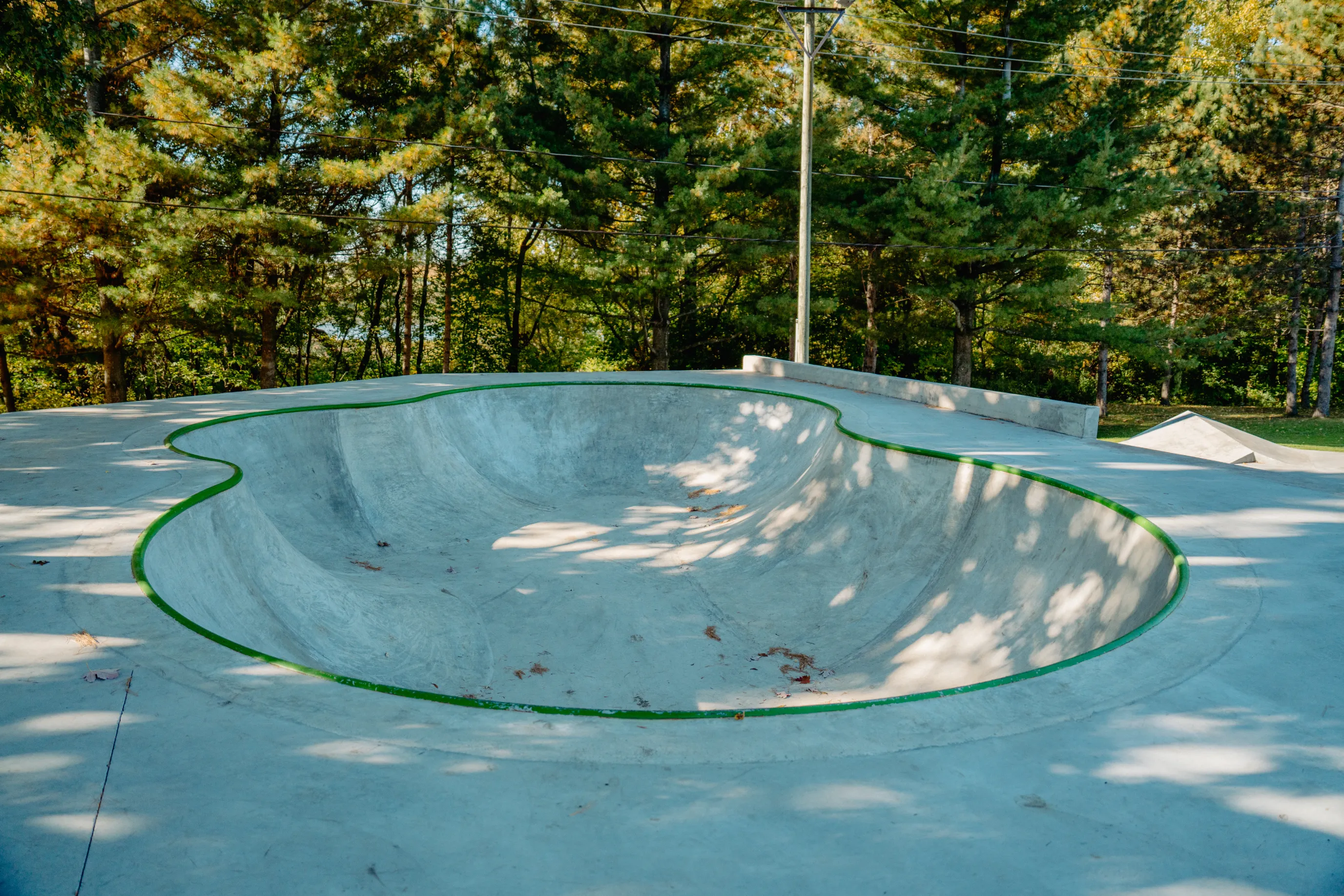
For skateparks, cast-in-place concrete remains the reference. Its fluidity, its longevity, its resistance to freeze and thaw cycles, its low maintenance demand and its ability to adapt perfectly to the site make it an essential choice.
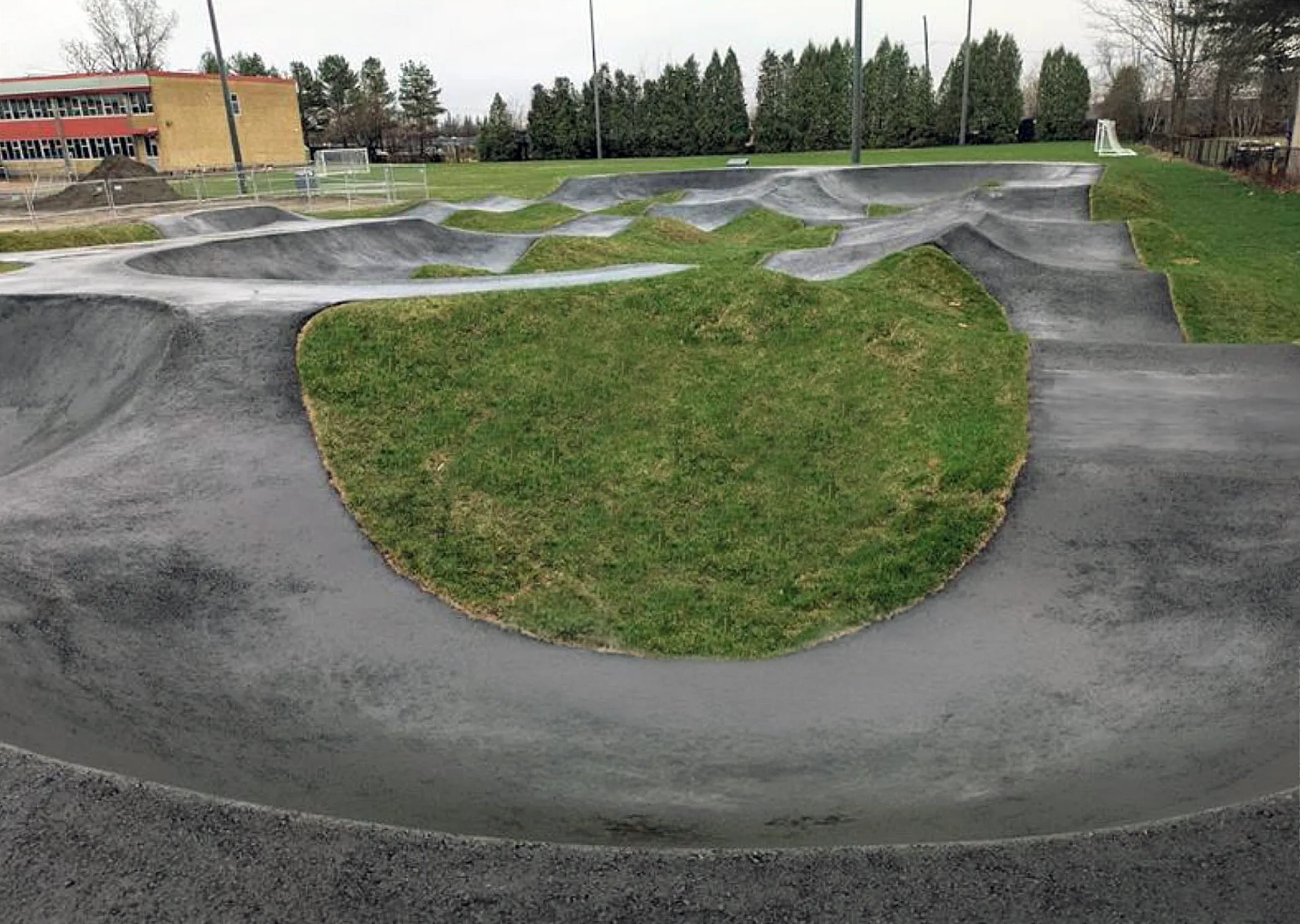
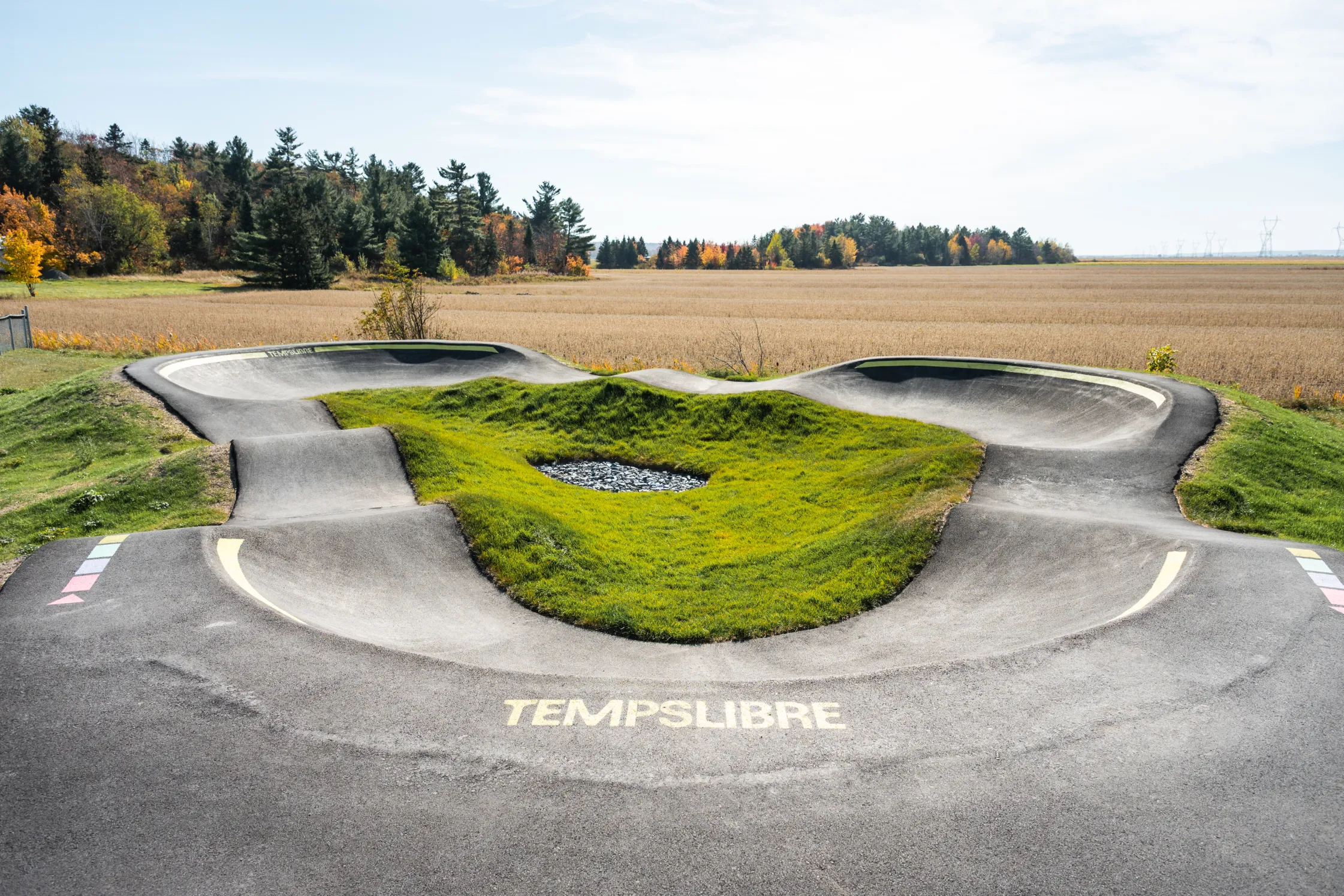
On the pumptrack side, asphalt clearly takes over modular structures. The continuous surfaces offer better grip, more safety and greater durability in the face of the climate. They are also suitable for a wide variety of practices — cycling, skateboarding, scooter, skates and BMX. Conversely, modular pumptracks remain more slippery, less stable and more limited in their uses.
3. Scalable and adaptable infrastructures
Municipalities are looking for projects that can adapt over time. Evolving layouts are gaining in popularity: possible extensions, addition of new areas, integration of additional modules or designs designed to follow the evolution of sports practices.
This progressive approach makes it possible to optimize investments while creating dynamic spaces that grow with the community.
4. A design that focuses on community rather than competition
The 2025 design focuses on fun, accessibility and conviviality. The objective is no longer to create environments dedicated to pure performance, but places where people come back to play, learn, progress and socialize.
For skateparks, there is a return to urban roots: street plazas inspired by the city's environment, fluid glide lines, multifunctional spaces and architectural integration into the site. The priority is experience — creativity, progress, atmosphere — rather than a formal competitive framework.
For pumptracks, the trend is clearly family oriented. They are now designed for all ages and levels. They are no longer performance circuits, but real environments for play, learning and gathering.
Conclusion
The 2025 trends show a major evolution in the way skateparks and pumptracks are designed. These spaces are becoming multi-purpose, safe, adaptable, and deeply integrated into community life.
This vision is at the heart of Tempslibre's mission: to imagine thoughtful, sustainable spaces adapted to the realities of Quebec communities.
Reflect space. Activate the community.